
Over the past several years, market dynamics have been driven largely by Nvidia and a small group of “AI winners” – companies the market has deemed the ultimate beneficiaries of the AI (artificial intelligence) era. The resulting narrative is that the Technology sector is an “expensive” area to invest in today. This is, admittedly, true on the surface.
Using the tech-heavy NASDAQ-100 as a proxy for the overall sector, we see:
- Near-record highs on an Enterprise Value/Sales basis,
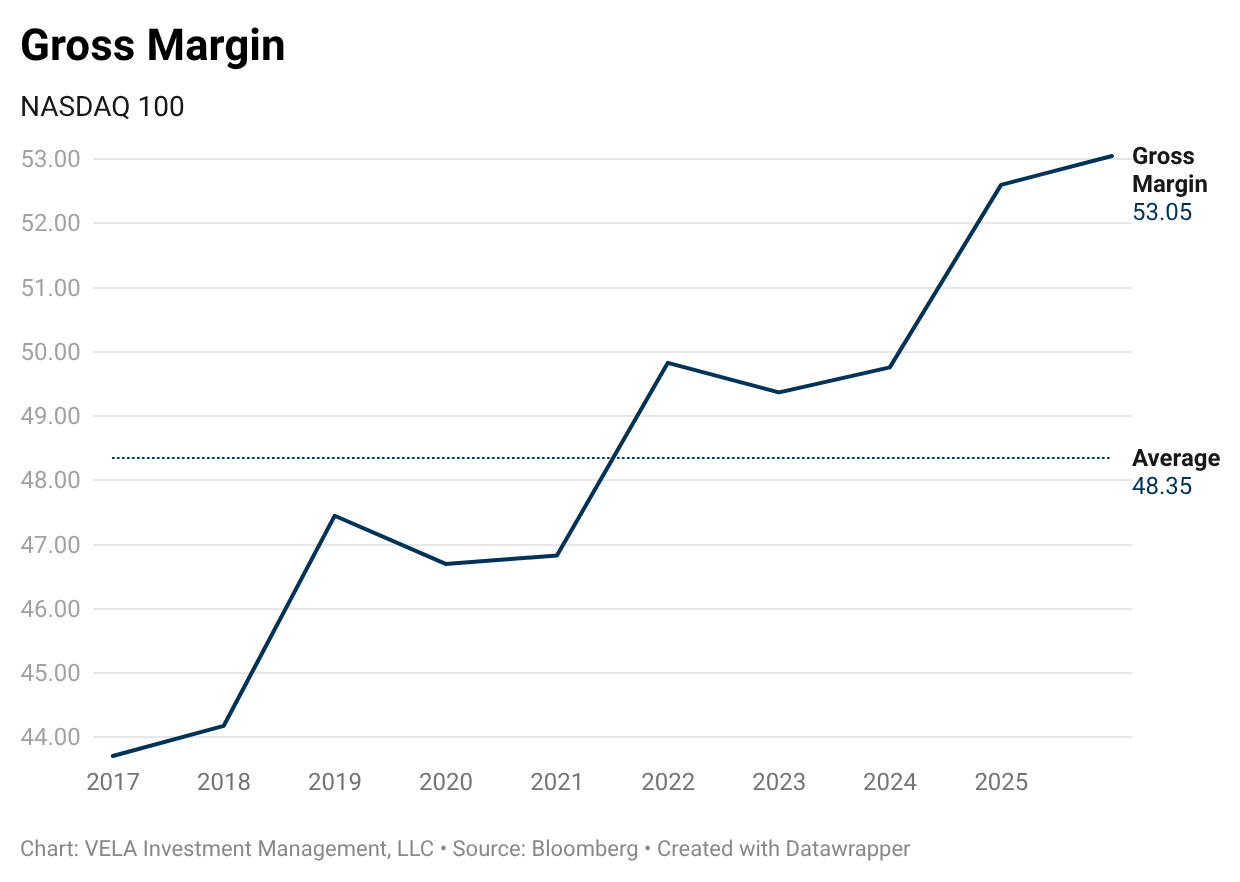
- Record profit margins which mask the expensiveness of the sector on an earnings multiple basis, and
- The resurgence of speculative names – perhaps best illustrated by the NASDAQ-100’s significant underperformance relative to the ARK Innovation ETF (ARKK) in 2025. For reference, over 1/3 of ARKK is invested in unprofitable companies compared to less than 4% for the NASDAQ-100.1
– all while fears around an AI bubble grow.
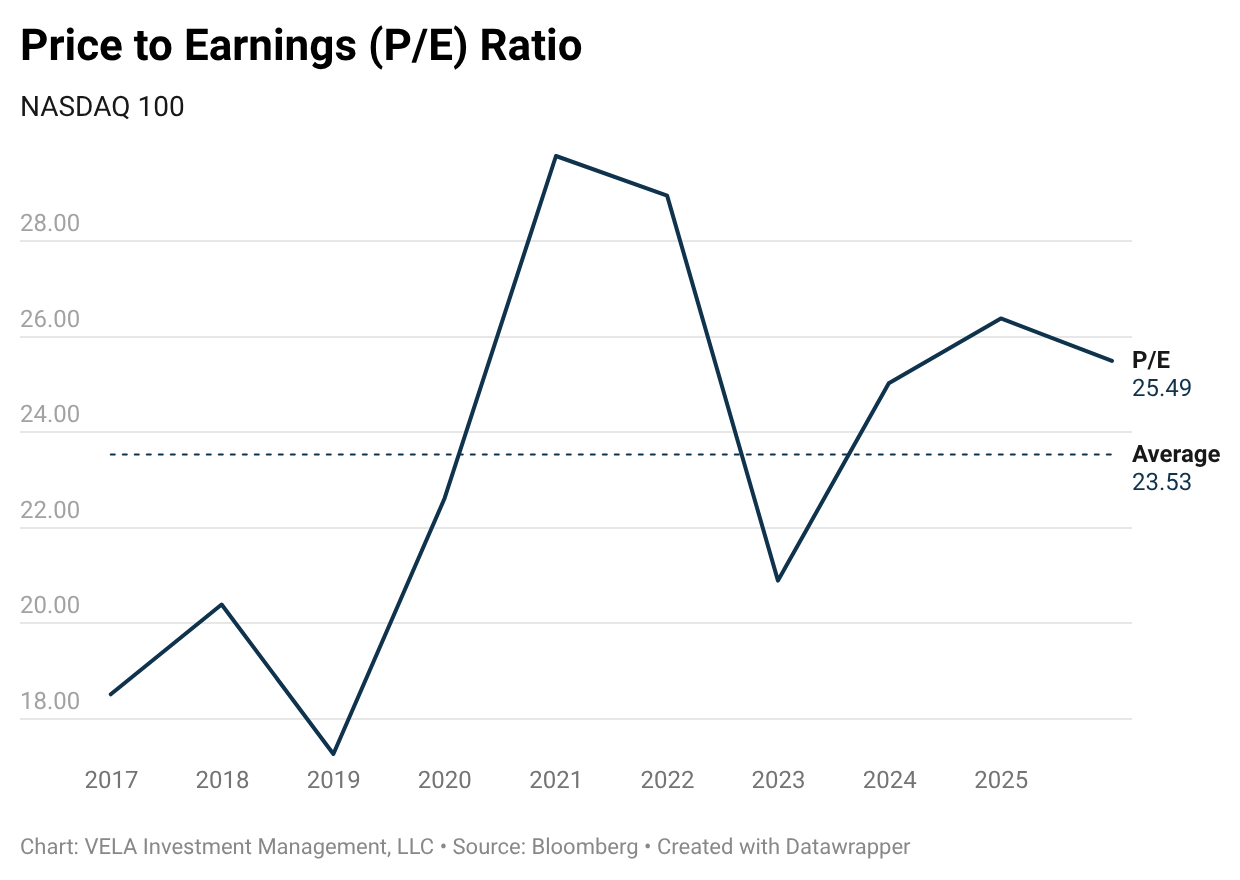
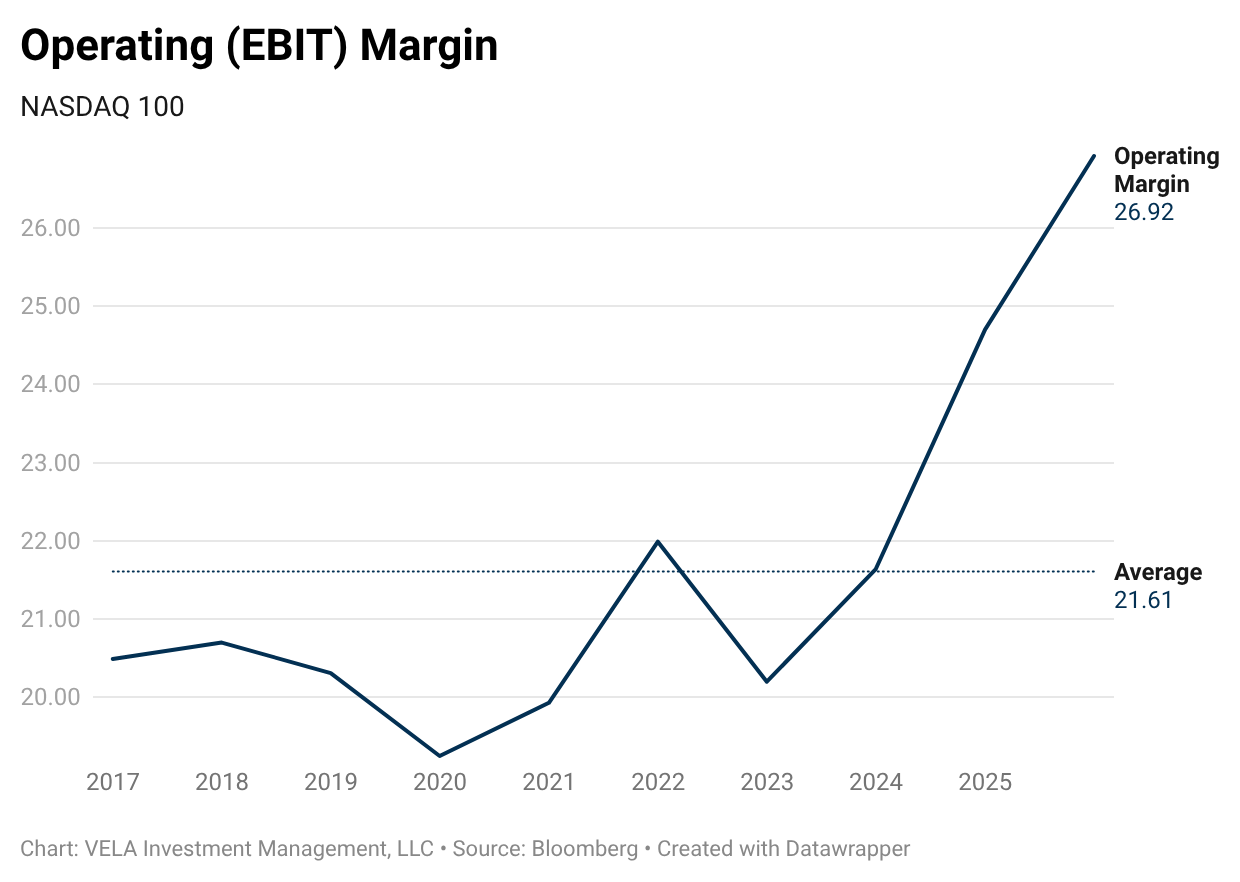
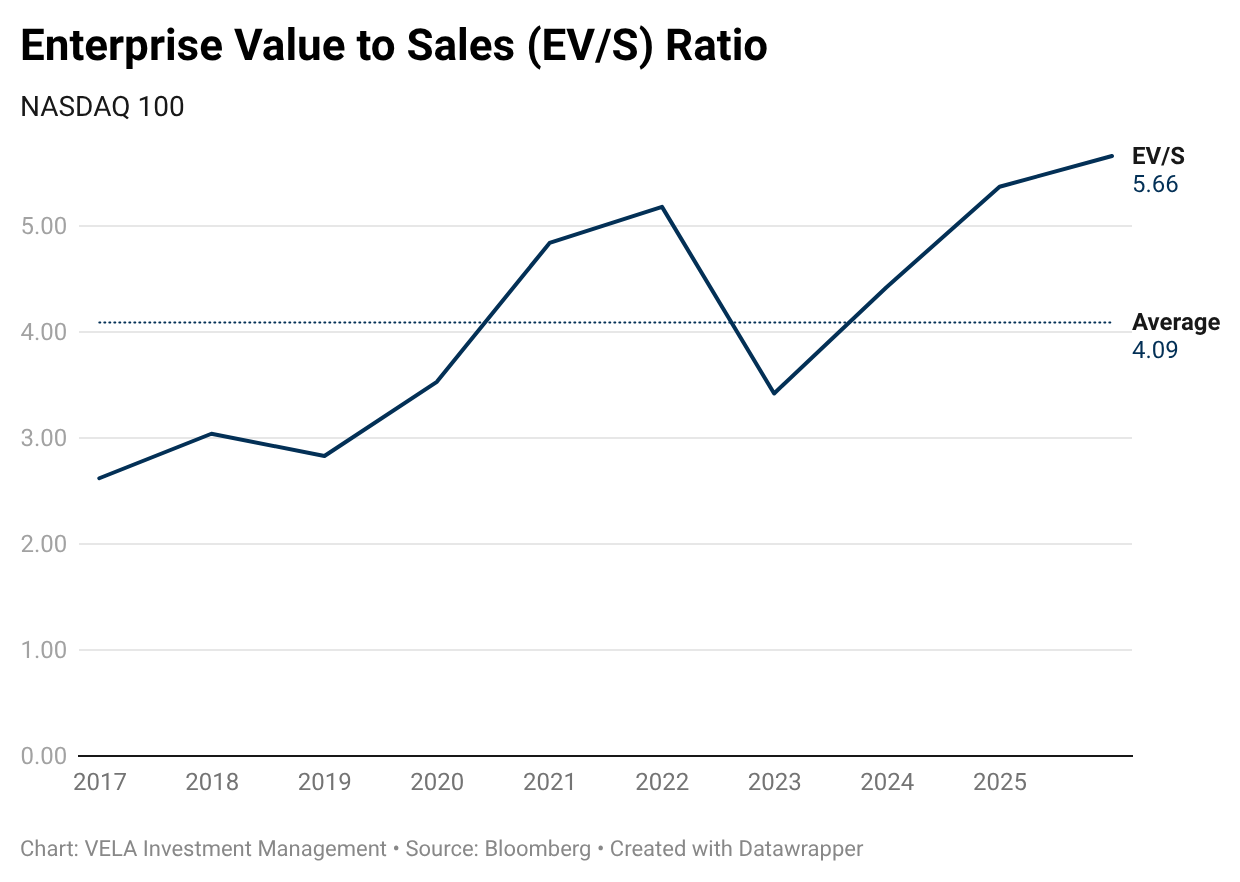
However, parsing out individual sector constituents, as we’ll do in this paper, reveals many quality companies (i.e. profitable businesses with strong balance sheets and attractive underlying business models) trading at historically attractive valuations.
AI Winner or Loser – The Market’s Definitive Ranking
The prevailing market narrative today for most companies in the Technology sector appears to be akin to the market having its own proverbial “sorting hat” whereby it assigns companies as definitive AI “winners” –those businesses that stand to benefit exponentially from the proliferation of AI, or “losers”—dinosaurs to be cannibalized as the new technology continues to progress. To date, “winners” have largely been represented by those companies most material to the hardware necessary for continued AI expansion (think GPU chip designer, NVIDIA, while “losers” have included software companies like Salesforce). We also see market sentiment for many names seesaw between these two categories over short-term periods as the AI landscape continues to evolve.
In our view, the topic of AI – in terms of (1) company valuations and (2) the end impact of the technology – is often incorrectlylumped together as a single broader topic. While we view many of the “AI winners” as grossly overvalued today, we simultaneously believe that AI will be – and has been for years – a transformative technology across industries and for society broadly. These are not contradictory beliefs.
The proliferation of AI will be dictated in large part by decreasing the technology’s cost-to-serve, ultimately aiming to reach a point of negligible marginal costs (at least relative to the end application). This scenario pushes firmly against the hardware-focused AI winners’ record sales and profitability in recent years, as AI capital expenditures (“capex”) have ballooned and resulting free cash flow (“FCF”) generation has diminished. Over time, as competitive forces diminish advantages stemming from hardware differentiation, we believe the value of AI technology will increasingly shift away from hardware and accrue to software companies (many of today’s “AI losers”) – consistent with historical dynamics.
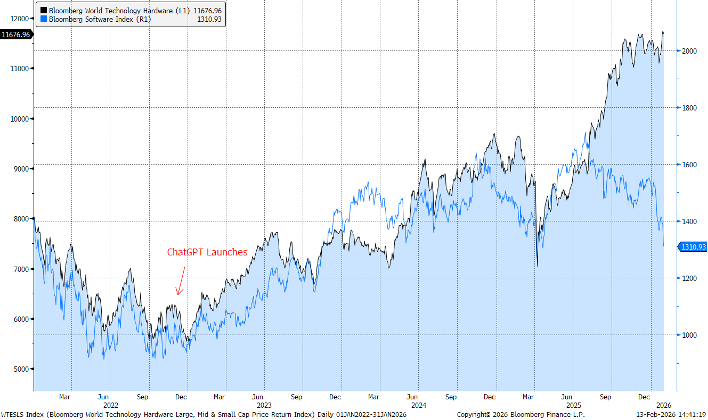
The below chart illustrates the outperformance experienced by hardware vs. software companies since 2022, with deviations in performance becoming more pronounced following the public launch of ChatGPT in November 2022 and significant divergence over recent months during the software selloff.
Navigating the Hype: Where We See Opportunity Today
Despite the narrative that is often cited around the long-term transformative impact of AI justifying the valuation of the “AI winners”, ironically other considerations such as sustainability of margins or competitive positioning among these companies are often evaluated on a much shorter time horizon (if at all). Where our approach differs: as fundamental, long-term investors, we focus on estimating the future, risk-adjusted cash flows of a subject company over at least five years.
There are three broad categorizations where we continue to find opportunities for quality businesses within the technology sector, though many companies don’t fit neatly into just one category. These include: (1) GARPY (growth at a reasonable price) companies with varying degrees of AI tailwinds (e.g. Alphabet, Inc. – GOOGL), (2) companies with perceived AI displacement risk (e.g. Salesforce, Inc. – CRM), and (3) strong, cash generative companies whose end businesses are relatively more insulated from the trajectory of AI proliferation (though in some cases, are underappreciated AI beneficiaries) (e.g. Infineon Technologies – IFNNY).
- Parsing Out the “Mag 7”
In recent years, the “Mag 7” (AAPL, AMZN, GOOGL/GOOG, META, MSFT, NVDA, TSLA) has been a commonly cited proxy for the outperformance and perceived expensiveness of the broader market. However, even within this group we see material bifurcation in the attractiveness of opportunities.
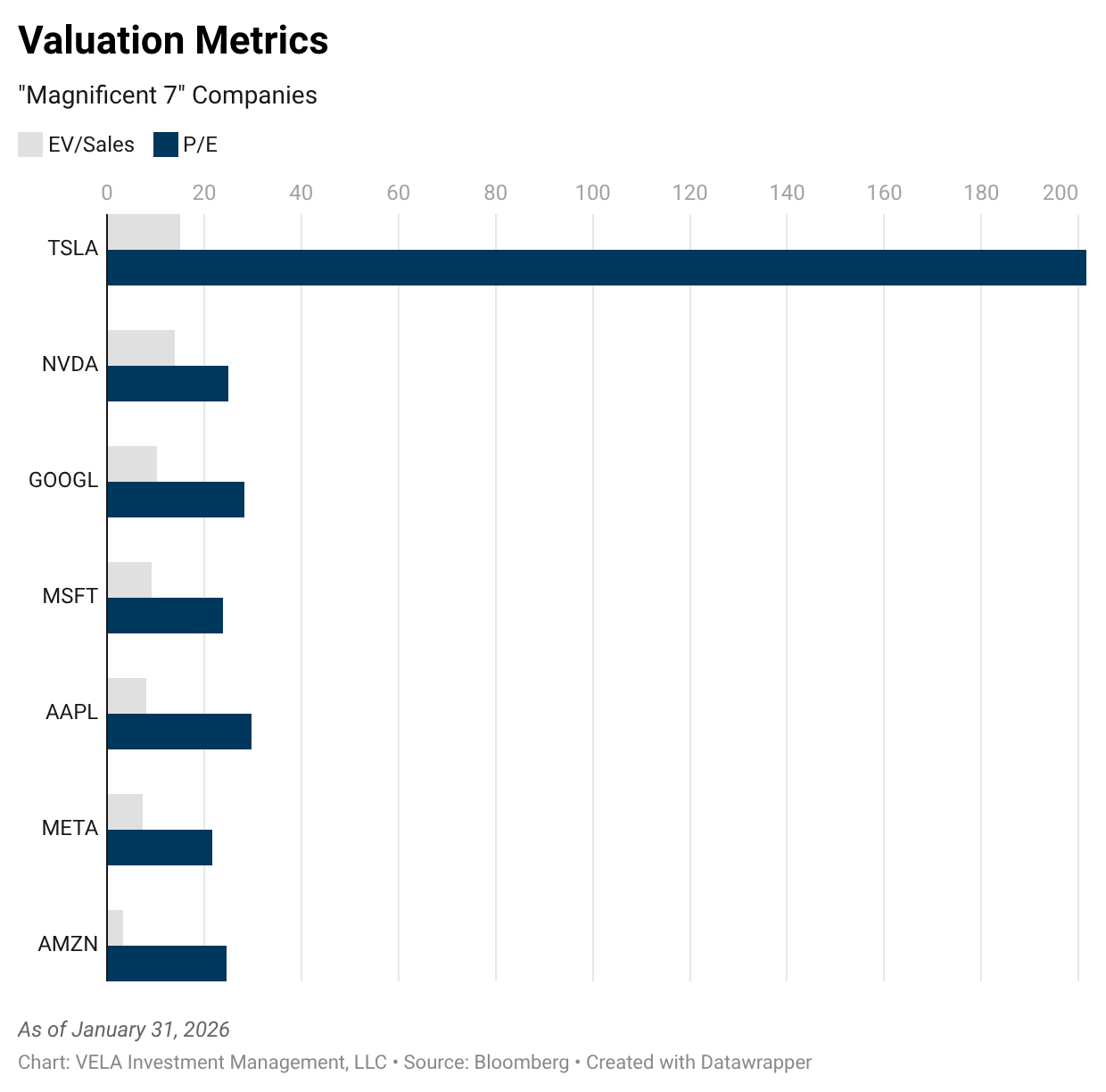
Names such as Tesla, Inc. (TSLA) have garnered a cult-like following with a valuation buoyed not by company fundamentals but rather far-reaching ambitions such as humanoid robots. Another example, Nvidia Corporation (NVDA), requires investors to justify a valuation that will require the continuation of gravity-defying performance for decades to come. This comes amidst growing concerns of an AI capex bubble and with little consideration for dynamics such as the sustainability of NVDA’s margins as viable competition increases and hyperscalers prioritize their own custom chipsets. Conversely, another Mag 7 name, GOOGL, is an example of one of our higher conviction Technology sector ideas over recent years.
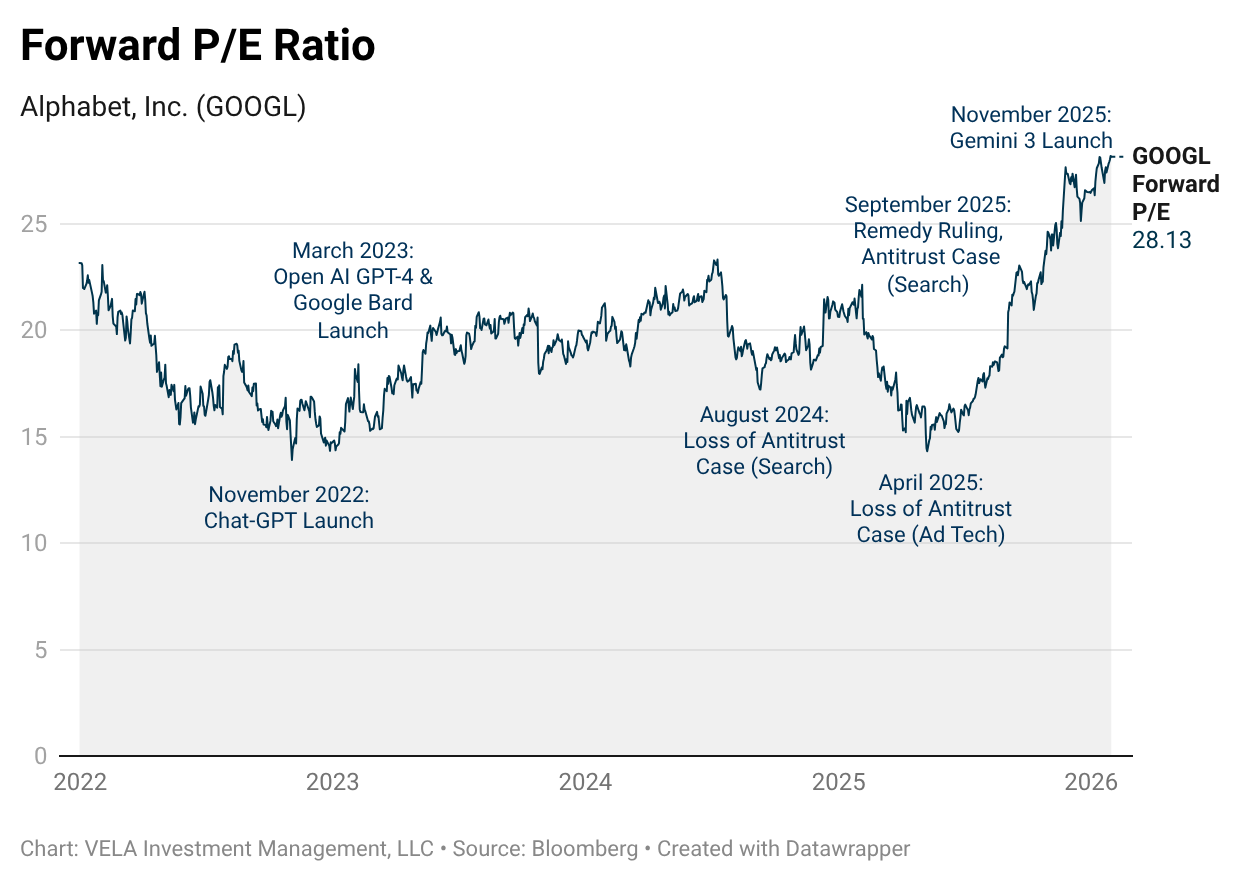
In the case of GOOGL, concerns over the long-term competitiveness of its core Search business in the age of AI have overshadowed its historical AI expertise and its enviable position from both a (1) data perspective as its suite of services (e.g. Search, YouTube, Maps, etc.) enhance the efficacy of its AI products and (2) distribution perspective with opportunities to incorporate AI across its services that already serve a massive global userbase – making GOOGL, in our view, one of the largest long-term beneficiaries of AI. Amazon (AMZN) offers a similar case–relative to a decade ago, the company’s first-party ecommerce business today is approximately half the size of its overall revenue base, as many accretive high-margin businesses have scaled quickly and been enabled by the success of its core ecommerce business. We believe the underlying economics of AMZN’s business are only starting to shine through as management continues to invest meaningfully across its different businesses and prioritizes a long-term, ROIC (return on invested capital)-based approach.
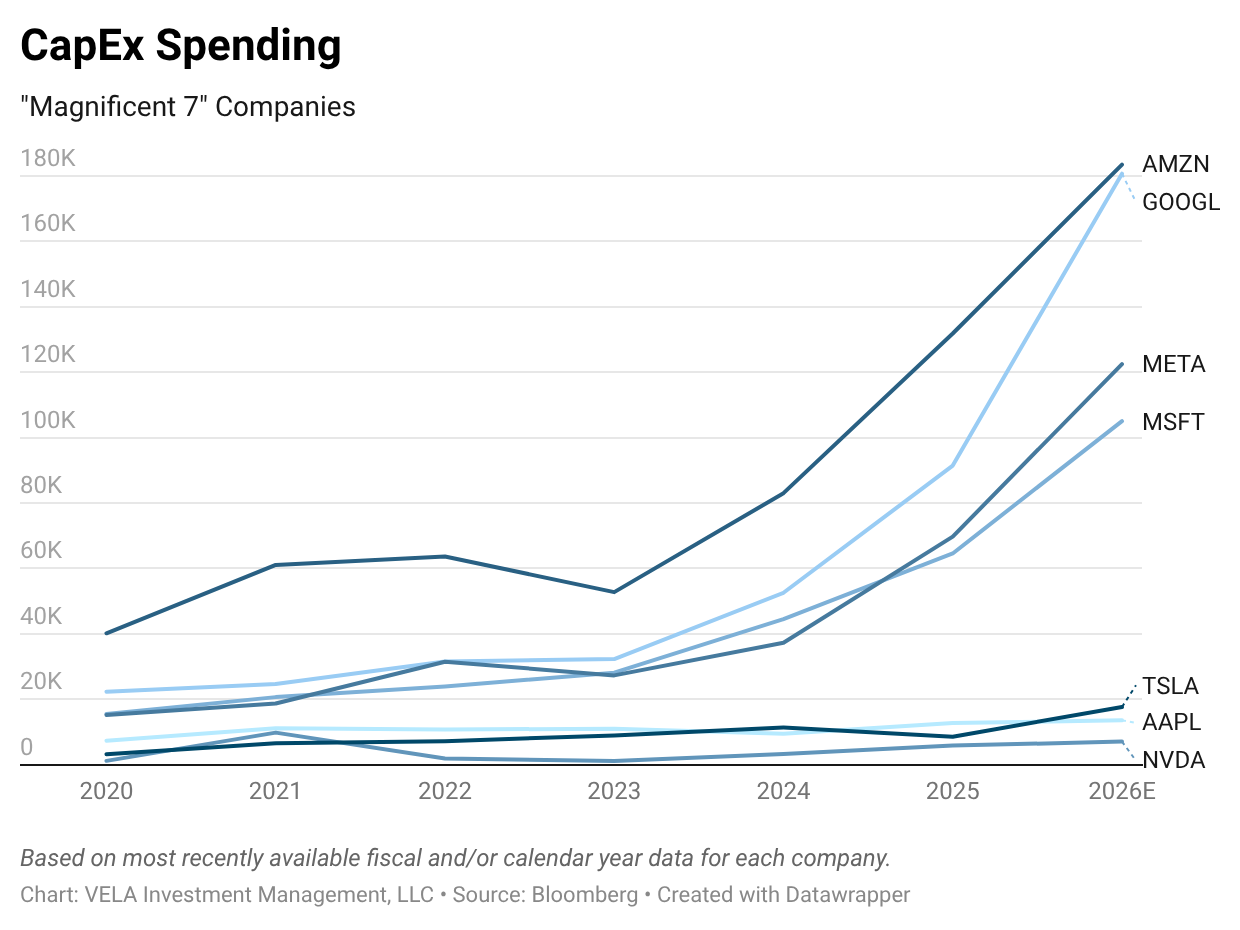
Even as the topic of compressing FCF margins resulting from elevated AI capex has come into focus for hyperscalers like GOOGL and AMZN, we believe this is a temporary dynamic and the optionality in these businesses will ultimately lead to attractive underlying economics over the long-term. As capex has continued to rise, we’ve seen growing efforts to prioritize in-house chip production to lessen dependence on NVDA, resulting in improving the price-to-performance dynamic for both external cloud customers and internally as they drive down the cost-to-serve of their AI-centric products.
GOOGL is also a prime example of rapidly shifting market expectations—the company has undergone countless swings in market sentiment over recent years, largely spurred by (1) concerns over AI disruption in its core Search business and (2) antitrust risk. Combined with its relatively large position size in some VELA strategies, it has earned a recurring spot in our quarterly strategy commentaries as, alternatingly, a top contributor and detractor to performance. Throughout this time, we have remained steady handed in our approach to estimating GOOGL’s underlying intrinsic value with a long-term framework, which has exhibited significantly less volatility than the stock’s price movement would suggest. GOOGL is one of many companies that has undergone frequent shifts in sentiment, and while current market sentiment has shifted closer toward an “AI winner” (while maintaining a reasonable valuation), we would not be surprised to encounter further sentiment shifts.
(2) Companies with Perceived Displacement Risk
Digging into the second category, an area ripe with opportunities as of late has been companies whose business models have come under scrutiny because of perceived AI displacement risk –leaving them out of favor with investors. We remain selective in this area as we prioritize what we believe to be quality companies with strong balance sheets that continue to display encouraging fundamental results – remaining acutely aware of the long-term competitive risks that AI may present, while weighing these considerations against the notable attractiveness of the valuations today. In our view, for many, AI is not only an overstated risk but, in fact, presents a material growth opportunity.
Though not an exhaustive list, below we present examples of VELA holdings along with some of the common prevailing broader market narratives that have weighed on their valuations.
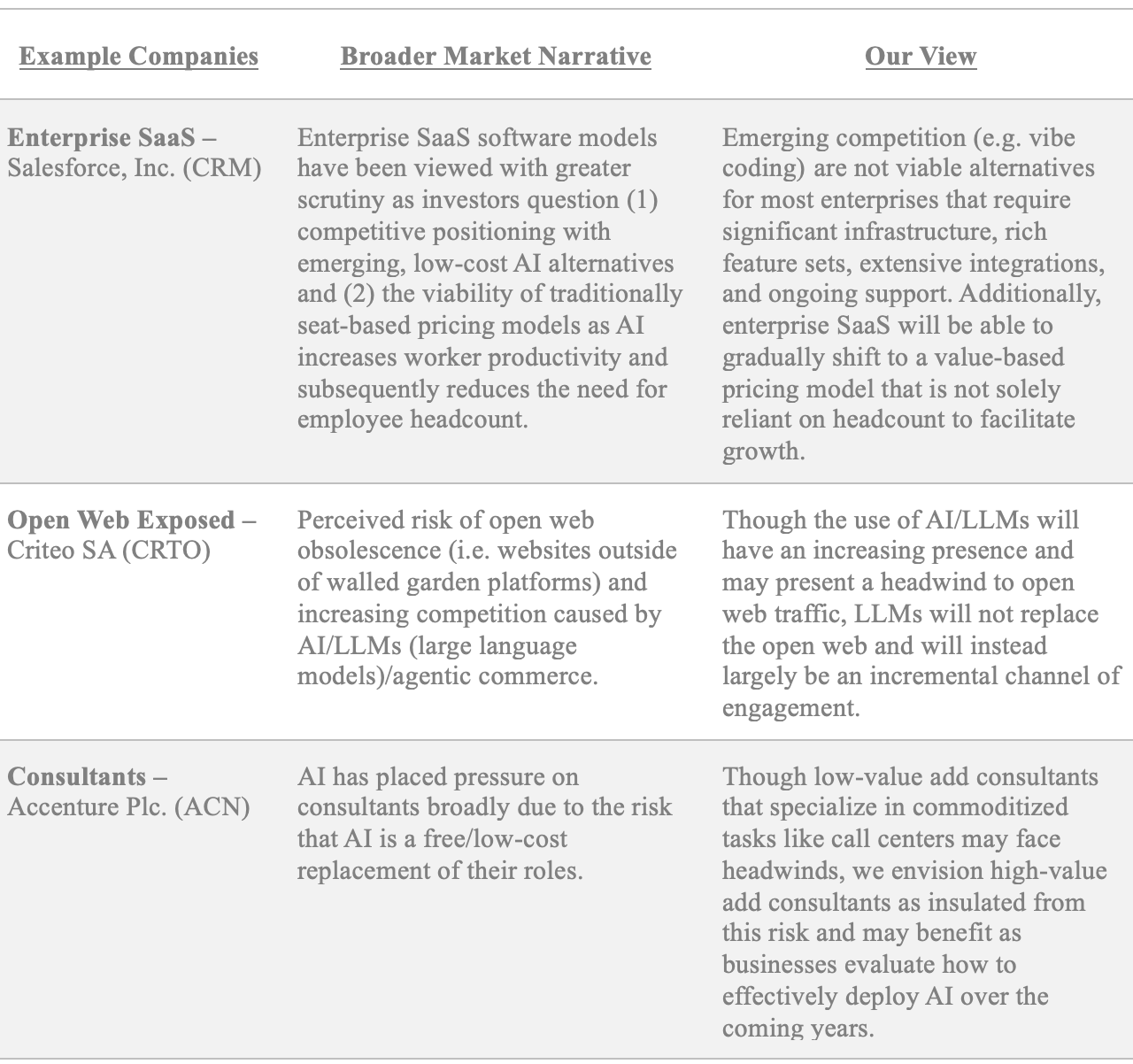
It is important to note that the fundamental performance of these companies does not match the prevailing AI displacement narrative; in most cases they continue to grow strongly and continue to be highly profitable. Additionally, given undemanding starting valuations, the fundamental results we think these companies must achieve to be worthwhile investments over the coming years are not defined by scenarios of immense success.
(3) Companies Insulated from the AI Displacement Narrative
While we believe the previously cited companies could present significant opportunities, we size positions according to our view of the risk/reward and are cognizant of the correlated risks that some of these companies share when constructing portfolios. We’ve also focused on finding attractive opportunities which have been largely excluded from the AI narrative, but which have the potential to be sizable beneficiaries of AI proliferation.
A lesser-known example is Infineon Technologies AG, a German company that specializes in power semiconductors. Approximately half of its business is exposed to the automotive end market, where the long-term drivers of its business revolve largely around increasing vehicle semiconductor content (rather than solely on end market vehicle volume). However, an increasingly material piece of Infineon’s business is its position in delivering power solutions for AI data centers. Infineon’s technology expertise and holistic system-based approach have allowed it to be a leader in AI power, commanding significant market share across a diverse customer base. After AI server revenue this past year (FY’25) almost tripled to more than €700M, this business is expected to achieve ~ €1.5B in revenue this upcoming year (FY’26), ~€2.5B the following year (FY’27), with notable growth prospects in the years ahead as power efficiency continues to be a growing topic. While this business only represented ~5% of Infineon’s FY’25 revenue, it presents what we view as a free call option, given our belief that Infineon trades at a valuation we consider attractive even when excluding this growth opportunity – one example of how we can participate in an AI beneficiary without paying the associated premium price for an “AI winner”.
The Next Chapter
Amid a broadly expensive market environment, our investment team is energized by the rich opportunity set of quality businesses that exist today across our investment universe, including many opportunities within the tech sector. While the market remains forward looking, investors’ acceptable time frame has increasingly compressed over recent years, rewarding companies that can show positive results today – in many cases without consideration for (1) the price paid and/or (2) the sustainability of results over the long-term. Our fundamental, bottom-up, long-term approach acts as a meaningful differentiator in such environments, providing us with the flexibility to look past near-term narratives and assess the long-term earnings power of our investments. AI is a transformative technology and today is providing a fertile ground of attractive investment opportunities – they just aren’t the “AI winners” most investors have bought into.
Disclosures:
VELA Investment Management, LLC is a registered investment adviser registered under the Investment Advisers Act of 1940, as amended. Registration does not imply a certain level of skill or training. More information about VELA Investment Management, LLC, including our investment strategies, fees and objectives, can be found in our Form ADV Part 2, and/or Form CRS, which is available upon request.
Information presented is for educational purposes only and does not intend to make an offer or solicitation for the sale or purchase of any specific securities, investments, or investment strategies. Investments involve risk and unless otherwise stated, are not guaranteed. Be sure to first consult with a qualified financial adviser and/or tax professional before implementing any strategy discussed herein. Past performance is not indicative of future performance.
The views expressed are those of VELA Investment Management, LLC as of 02/23/2026 and are subject to change. These opinions are not intended to be a forecast of future events, a guarantee of future results, or investment advice. Third-party information in this report has been obtained from sources believed to be accurate; however, VELA makes no guarantee as to the accuracy or completeness of the information.
As of the most recent month end period, the following holdings (noted in this piece) were held in one or more VELA Investment Management strategies: GOOGL (All Cap Concentrated, Large Cap Plus, Income Opportunities), AMZN (All Cap Concentrated, Large Cap Plus), MSFT (Large Cap Plus), META (Large Cap Plus), CRTO (All Cap Concentrated, Small Cap, Small-Mid Cap, International), CRM (Large Cap Plus, Income Opportunities), ACN (All Cap Concentrated, Large Cap Plus, Income Opportunities), IFNNY (All Cap Concentrated, Large Cap Plus, International), ARKK (Large Cap Plus- Option). As of the same time period, NVDA, TSLA, and AAPL are not held in any VELA strategies. The companies identified above are example holdings and subject to change without notice. The companies above have been selected to help illustrate VELA’s investment process. This information should not be considered a recommendation to purchase or sell any particular security.
The Nasdaq-100 Index tracks the 100 largest non-financial companies listed on the Nasdaq Stock Market, heavily featuring major tech, healthcare, and consumer brands like Microsoft, Apple, and Amazon. It’s a market-capitalization-weighted index, meaning bigger companies have more influence, and serves as a key benchmark for growth-oriented investments, offering a gauge of innovation-driven sectors.
The ARK Innovation ETF (ARKK) is an actively managed exchange-traded fund focused on long-term capital growth by investing in domestic and foreign companies involved in “disruptive innovation”.
The Enterprise Value-to-Sales (EV/Sales) is a financial metric comparing a company’s total valuation (including debt and equity) to its annual revenue. It measures how much investors are willing to pay for each dollar of sales, acting as a valuation tool to determine if a stock is over- or undervalued relative to its peers.
The Price-to-Earnings (P/E) Ratio, sometimes referred to as an earnings multiple, is a valuation metric that measures a company’s current share price relative to its earnings per share, indicating what investors are willing to pay for $1 of a company’s earnings.
Gross Margin is a financial metric representing the percentage of revenue a company retains after accounting for the direct costs associated with producing goods or services (Cost of Goods Sold, or COGS).
The EBIT Margin (Earnings Before Interest and Taxes margin), also known as the operating margin, shows a company’s profitability from its core business by measuring how much profit it makes for every dollar of sales, before accounting for interest and taxes.
Capex (Capital Expenditure) is money a company spends to buy, maintain, or improve its long-term physical assets, like buildings, equipment, technology, or land, to increase future economic benefits, rather than for daily operations.
Free Cash Flow (FCF) is the cash a company generates after covering its operating expenses and capital expenditures (Capex). It represents the discretionary cash available for reinvestment, debt repayment, dividends, or acquisitions without affecting day-to-day operations.
Intrinsic Value represents the true, inherent worth of an asset, investment, or company based on its fundamental, underlying factors—such as cash flows, revenue, or assets—rather than its current, fluctuating market price. It serves as an objective, calculated estimate of long-term value used by investors to identify undervalued or overvalued securities.
Return on Invested Capital (ROIC) is a profitability ratio that measures the efficiency with which a company uses its capital (debt and equity) to generate profits, typically expressed as a percentage.
“Magnificent (Mag) 7” refers to a group of seven dominant, high-performing U.S. technology and growth stocks (listed above). Coined in 2023, the term highlights these companies’ massive market capitalization, AI influence, and substantial impact on overall market performance.
Hyperscalers are massive cloud service providers—led by Amazon Web Services (AWS), Microsoft Azure, and Google Cloud Platform—that operate extensive, global data center infrastructures designed to provide highly scalable and cost-effective computing, storage, and network services. They enable on-demand, rapid scaling (scaling out) to support millions of users, AI, and big data.
Footnotes:
1Factset (EBIT return as of 12/31/25); note: QQQ ETF is used as a proxy for the NASDAQ-100.
Author

Chris Brinich, CFA
Jun 16, 2020